Does Late Menopause Increase Breast Cancer Risk - Meno Martha, Hormone Therapy and Breast Cancer Risk ⋆ Meno ... - Women who go through menopause later in life have an increased risk of breast cancer compared to women who go through menopause earlier.
Dapatkan link
Facebook
X
Pinterest
Email
Aplikasi Lainnya
Does Late Menopause Increase Breast Cancer Risk - Meno Martha, Hormone Therapy and Breast Cancer Risk ⋆ Meno ... - Women who go through menopause later in life have an increased risk of breast cancer compared to women who go through menopause earlier.. Studies show that ept does not increase the risk of endometrial cancer (cancer in the lining of the uterus). Early menarche and late menopause are known to increase women's risk of developing breast cancer. The more a woman has been exposed to estrogen and the more menstrual cycles she has. Increased exposure to hormones, such as estrogen increased number of ovulations ovulation occurs when the ovary releases eggs. Estrogen) throughout her lifetime, such as early menarche, number of pregnancies, whether or not a woman has breastfed, late menopause, that impact breast cancer risk.
(rates begin to increase after age 40 and are highest in women over age of 70.) The more a woman has been exposed to estrogen and the more menstrual cycles she has. Increased exposure to hormones, such as estrogen increased number of ovulations ovulation occurs when the ovary releases eggs. And yet women continue to fear breast cancer more than the statistics warrant. Because vaginal bleeding after menopause can be a symptom of endometrial cancer, this often leads to further testing.
Risk Factors - National Breast Cancer Foundation from s3.amazonaws.com If you had more than 450 menstrual cycles (a very high menstrual life), you have a very high risk of breast cancer. Women with higher circulating levels of estrogens have a higher risk of developing breast cancer, so those who hit menopause earlier actually have a lower risk of. Even though women who reach menopause later at are a higher risk for reproductive cancers, they are statistically likely to live longer than then their counterparts who go through menopause within the average or early age range. Starting menopause late (after age 55) increases the risk of breast cancer. Gaining weight after menopause can also increase a woman's risk of breast cancer, states the md anderson cancer center. Breast cancer is not a disease of having too much estrogen in your body. Women who enter menopause are not necessarily at a higher risk for breast cancer, but some factors tied to menopause can play a role. Therefore, maintaining a healthy weight or even losing a little weight can be beneficial.
Women who go through menopause later in life have an increased risk of breast cancer compared to women who go through menopause earlier.
Each year past the age of 50 raises the odds of the disease by 6 per cent, they say. Women who go through menopause later in life have an increased risk of breast cancer compared to women who go through menopause earlier. For example, late menopause increases breast cancer risk by one percent. So the more menstrual periods a woman has, the longer these tissues are exposed to estrogen. Starting menopause late (after age 55) increases the risk of breast cancer. This is due to having an increased exposure to hormones such as estrogen. Reproductive factors that increase the duration and/or levels of exposure to ovarian hormones, which stimulate cell growth, have been associated with an increase in breast cancer risk. Even though women who reach menopause later at are a higher risk for reproductive cancers, they are statistically likely to live longer than then their counterparts who go through menopause within the average or early age range. To assess reliably the strengths of these associations and whether they vary by tumour subtype or by characteristics of affected women requires large numbers, and we address these questions by combining information from more than 100. (rates begin to increase after age 40 and are highest in women over age of 70.) Family history of breast or ovarian cancer. Late menopause increases the risk of breast cancer. In contrast, breastfeeding, parity and premenopausal oophorectomy confer protection.
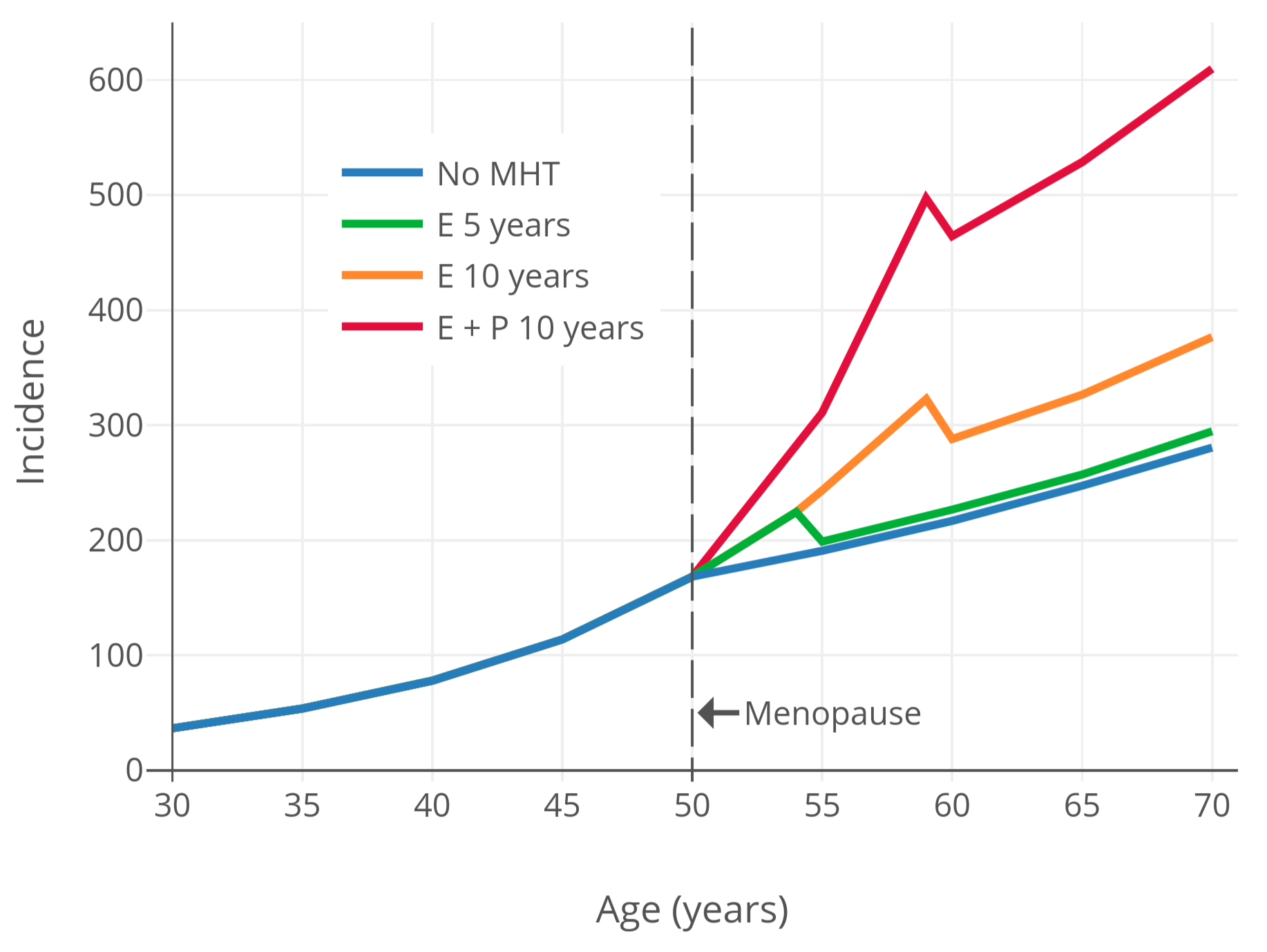
Breast cancer is not a disease of having too much estrogen in your body. Women who go through a later menopause are at a greater risk of breast cancer, british scientists have warned. However, the rates of many cancers, including breast cancer, do increase with age. Menopause itself is not associated with an increased risk of developing cancer. A pooled analysis of data from 117 studies looked at the age at menopause and breast cancer risk.
Postmenopausal Exercise Weight Loss Uterine Cancer Grow ... from www.core-jetfuel.eu For example, women who go through menopause after age 55 have about a 40 percent higher risk of breast cancer than women who do so at age 45 or younger 17 . Women who have a late menopause, starting after age 55, do have a higher chance of breast and uterine cancer because of longer lifetime exposure to estrogen, says dr. This is due to having an increased exposure to hormones such as estrogen. So women who have had lots of pregnancies and breastfed their children have lower risk. During a woman's menstrual cycle, estrogen stimulates the uterus and breast tissue. Estrogen) throughout her lifetime, such as early menarche, number of pregnancies, whether or not a woman has breastfed, late menopause, that impact breast cancer risk. Beginning menstruation early (before age 12) increases the risk of breast cancer by affecting the level of reproductive hormones a woman is exposed to during her lifetime. Starting menopause after age 55 increases a woman's risk of breast cancer and endometrial cancer.
Women who have a late menopause, starting after age 55, do have a higher chance of breast and uterine cancer because of longer lifetime exposure to estrogen, says dr.
That's probably because she's been exposed to more estrogen. Let's start with the good news: Family history of breast or ovarian cancer. (rates begin to increase after age 40 and are highest in women over age of 70.) During a woman's menstrual cycle, estrogen stimulates the uterus and breast tissue. Reproductive factors that increase the duration and/or levels of exposure to ovarian hormones, which stimulate cell growth, have been associated with an increase in breast cancer risk. It is linked to a higher risk of abnormal vaginal bleeding. So the more menstrual periods a woman has, the longer these tissues are exposed to estrogen. Estrogen) throughout her lifetime, such as early menarche, number of pregnancies, whether or not a woman has breastfed, late menopause, that impact breast cancer risk. Each year past the age of 50 raises the odds of the disease by 6 per cent, they say. Two main factors are linked with increased cancer risk after menopause: Even though women who reach menopause later at are a higher risk for reproductive cancers, they are statistically likely to live longer than then their counterparts who go through menopause within the average or early age range. The median age of diagnosis for women in the u.s.
Lastly, there are several risk factors associated with a woman's exposure to hormones (i.e. Women who enter menopause are not necessarily at a higher risk for breast cancer, but some factors tied to menopause can play a role. It also appears that the risk continues to increase with longer use. It has been proposed that early menarche and late menopause increase cancer risk via their effects on the lifetime number of ovulatory cycles (e.g., by increasing the duration of exposure to and the cumulative dose of ovarian hormones). Late menopause and breast cancer risk breast cancer risk also increases with advancing age, and there is some suggestion that late menopause further fuels this risk, according to the susan g.
Breast Cancer Risk with Hormone Therapy in Transfeminine ... from transfemscience.org In contrast, breastfeeding, parity and premenopausal oophorectomy confer protection. Reproductive factors that increase the duration and/or levels of exposure to ovarian hormones, which stimulate cell growth, have been associated with an increase in breast cancer risk. Beginning menstruation early (before age 12) increases the risk of breast cancer by affecting the level of reproductive hormones a woman is exposed to during her lifetime. Gaining weight after menopause can also increase a woman's risk of breast cancer, states the md anderson cancer center. Women who enter menopause are not necessarily at a higher risk for breast cancer, but some factors tied to menopause can play a role. Women with higher circulating levels of estrogens have a higher risk of developing breast cancer, so those who hit menopause earlier actually have a lower risk of. Dense breast tissue (including fibrocystic breasts) increases the risk of breast cancer To assess reliably the strengths of these associations and whether they vary by tumour subtype or by characteristics of affected women requires large numbers, and we address these questions by combining information from more than 100.
This is due to having an increased exposure to hormones such as estrogen.
Starting menopause after age 55 increases a woman's risk of breast cancer and endometrial cancer. Let's start with the good news: Early menarche and late menopause are known to increase women's risk of developing breast cancer. It has been proposed that early menarche and late menopause increase cancer risk via their effects on the lifetime number of ovulatory cycles (e.g., by increasing the duration of exposure to and the cumulative dose of ovarian hormones). That's because estrogen feeds certain breast cancers, helping them to grow. Menopause itself doesn't boost your breast cancer risk, but growing older does. This is due to the lengthened amount of time a. However, the rates of many cancers, including breast cancer, do increase with age. Women with higher circulating levels of estrogens have a higher risk of developing breast cancer, so those who hit menopause earlier actually have a lower risk of. For example, late menopause increases breast cancer risk by one percent. Postmenopausal women have a lower risk of breast cancer than premenopausal women of the same age and childbearing pattern. And yet women continue to fear breast cancer more than the statistics warrant. Even though women who reach menopause later at are a higher risk for reproductive cancers, they are statistically likely to live longer than then their counterparts who go through menopause within the average or early age range.
How Do You Know If You Have Cancer In Throat : What does shoulder pain associated with lung cancer feel ... : General signs of throat cancer may include the following: . I am concerned with your mental health, often mental health is not bought up when speaking to i suggest seeing a primary care doctor and talking about bulimia and your concern for the unlikely chance you have cancer. Throat cancer can be successfully treated if it is diagnosed early. Show you how to care for your stoma. How many meals a day do you have? The specialist who knows you and your disease can give you more accurate information about your particular outlook. This test might be done if you are having trouble swallowing because it shows how your throat. You probably know about the relationship between smoking and lung cancer, but did you know smoking is also linked to heart disease, stroke and other chronic lung diseases? Successful treatment and cure rates are high if you know what to look fo...
What Sign Is Cancers Compatible With / Are Cancer & Sagittarius Compatible? | Zodiac Love Guide ... : As well as being romantically compatible, cancer is sexually compatible with earth signs taurus, virgo and capricorn, as well as fellow water signs scorpio and. . Cancer, on the other hand, is very sensitive to disruptions in the emotional atmosphere and to anything that seems to threaten important relationships. The most compatible sign for scorpios is cancer. Cancers are sensitive and they don't like feeling conquered. The natural nurturer of the horoscope wheel, cancer energy helps us connect with our feelings. Cancers tend to be deep souls who thrive in loving relationships that are based on a mutual according to cancer compatibility charts there is a very big cancer and pisces compatibility chance as both signs are able to understand each others. The earth signs are a compatible match because their signs are in the. As a star sign ruled by the element of...
How Long Do Dogs Live With Untreated Lung Cancer : 10 Signs Your Dog Is In Pain Vetdc Canine Lymphoma Experts / Risks of canine lung cancer primary lung cancer (i.e. . By definition, the final stage of lung cancer implies that treatment options have been exhausted; A dog's life expectancy at this point can be hours to days. It's difficult to predict how long someone will live with lung cancer because there are a number of different types and lots of other variables. The type of lung cancer you have. Although the outlook can seem grim, some people with lung cancer can live longer than the average survival rate. If your dog is 8, and the average lifespan for his weight and breed is 10 years, and your veterinarian tells you that his survival time for his cancer is about 18 months to two years, and calls that a long time, he's right from a medical perspective. How long lung cancer can go untreated plays a factor in the survival rate. By definition, the fina...




Komentar
Posting Komentar